Video library
Eleven conversations recorded at EHRCON24 in November 2024 with the clinicians, architects and builders who have spent decades on the problem of health data - and know what it will take to solve it.
These interviews bring together clinicians, informaticians and builders who have spent years - in some cases decades - working on the problem of health data. Several are among the original architects of openEHR. Others have led national-scale implementations, built open-source tooling, or are practising clinicians who saw the failures of the current system firsthand. The conversations are candid: what is broken and why, and how they personally responded.
"Every barrier you put up leads to people stopping getting healthcare." One of openEHR's original architects, now a practising GP in Aboriginal communities where every unnecessary barrier to a health record has a measurable human cost. Sam raises something no-one else does: the significance of locked health data to families separated by the stolen generations. The architecture for citizen data sovereignty already exists. What is missing is political will.
Empowering Aboriginal Health through openEHR
Dr Heather Leslie - Standardising Clinical Data: A Collaborative openEHR Archetype Governance
Without shared clinical knowledge models, interoperability is a word. Heather has spent two decades building the archetype definitions that make it a practice - getting thousands of clinicians to agree on how to define every clinical concept, in every language, across every specialty. The foundational work that makes everything else possible.
Patrik Georgii-Hemming - Clinician-Led Digital Transformation at Karolinska
Karolinska had been investing heavily in proprietary digital systems - and getting further from its goals each time. Patrik led the decision to change direction entirely. He explains what it takes to shift one of Europe's most complex health systems onto open infrastructure, and why clinical leadership produces fundamentally different results than vendor procurement.
Professor David Ingram - 75 Years of Digital Health Innovation
The Emeritus Professor of Health Informatics at UCL watched the NHS spend £12bn on a national IT programme that collapsed. He brings forty years of calibrated perspective to a single question: what will it finally take to get the foundations right? His answer - health data as a utility, noticed only when absent - is the clearest argument for the commons model you will find.

Thomas Beale - Digital Healthcare Architecture: A Semantic, Clinician-Driven Platform
One of openEHR's original architects asks the most important question in digital health: if the technical solution exists, why hasn't it been adopted? His answer is unsettling - and precise. The barriers are commercial, not technical. An industry that profits from fragmentation has every incentive to keep building Swiss plugs.
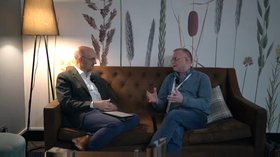
Dr Ian McNicoll - Clinician-Led openEHR: Micro-Innovations and Community Governance
A UK GP who has spent twenty years building open clinical tools in spite of national programmes, not because of them. Ian explains why meaningful progress in open digital health comes from individuals working around institutional resistance - and what genuine community governance looks like from the inside. Essential if you work in a large health institution and wonder why so little changes.
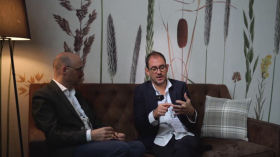
Dr Jordi Piera Jimenez - Person-Centric Open Health Platform in Catalonia
He built a unified openEHR platform for millions of citizens in Catalonia - and his challenge to every health system leader is direct: when you spend public money on proprietary software, you are not buying a system. You are transferring your region's data sovereignty to a vendor's commercial roadmap. One of the most practically grounded conversations in the series.
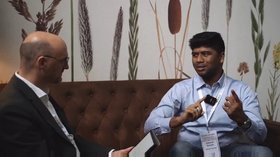
Dr Sidharth Ramesh - Harnessing openEHR: Eliminating Manual Data Transfers in Clinical Workflows
What changes when doctors stop transferring data manually? Sidharth shows openEHR at the clinical frontline. His framing cuts through the noise of every health IT procurement cycle: applications fail and get replaced every decade. A patient's data should outlast every system that holds it. Only one architecture is built for that reality.
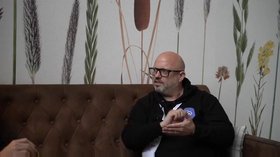
Andy Meiner - Harmonising Open Standards for Longitudinal Patient Records
Most health IT systems track clinical transactions. Andy asks a different question: what does it take to build infrastructure that serves a human life? His work on longitudinal records - records that follow a person rather than an institution - and his argument that data should outlast every application built to access it, is the clearest case for building to a human timescale rather than a software licence cycle.
Silvio Kimmel - Co-Developing Clinical Apps on openEHR: Vita Group's Open Platform Vision
What does it look like to build clinical software on shared open infrastructure instead of a proprietary platform? Silvio shows what the commons model enables from the inside - better software, built faster, at lower cost, with the whole community sharing in every improvement. No single company can solve all the problems. That's exactly why shared infrastructure matters.
Alex Vidrean - Decentralising Clinical Data Ownership with openEHR EHRbase
Alex builds EHRbase - the open source openEHR repository at the heart of citizen health data sovereignty. He explains why open source is the only model that gives organisations genuine control over their health data infrastructure - and why a commons that people can see, use, and contribute to grows more valuable with every organisation that joins it.
Dr Sam Heard - Empowering Aboriginal Health through openEHR
One of openEHR's original architects, now a practising GP in Aboriginal communities where every unnecessary barrier to a health record has a measurable human cost. Sam raises something no-one else does: the significance of locked health data to families separated by the stolen generations. The architecture for citizen data sovereignty already exists. What is missing is political will.